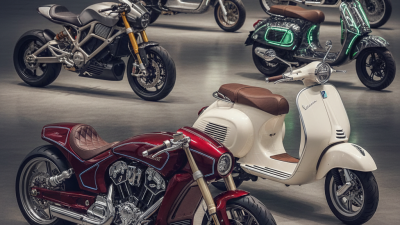
Deciding between a motorcycle and a scooter can honestly be pretty overwhelming at first. I mean, both have their own perks, depending on your lifestyle. John Smith, who's actually pretty well-known in the Motorcycles Scooters world, basically says, “Knowing what you really need is the best way to pick the right one.” His words remind us that personal preference plays a big role here.
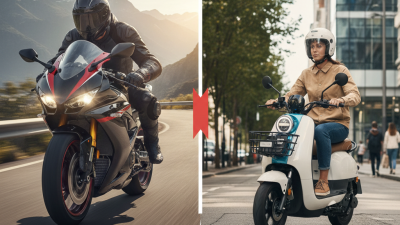
Now, if you're into speed and a bit of thrill, motorcycles are where it's at—they pack serious power and are perfect for those long rides or road trips. But if you're mainly commuting around the city, scooters tend to be a smarter choice—they're small, easy to park, and great for weaving through traffic or quick trips around town.
That said, a lot of folks might miss some important details. For example, motorcycles are super exciting but often need more upkeep and maintenance. Scooters are usually simpler to keep up with, but they might fall short if you're looking for top-tier performance. So, really taking a moment to think about how you'll actually use your ride can make all the difference when choosing between these two in the 'Motorcycles Scooters' scene.
Understanding the Differences Between Motorcycles and Scooters
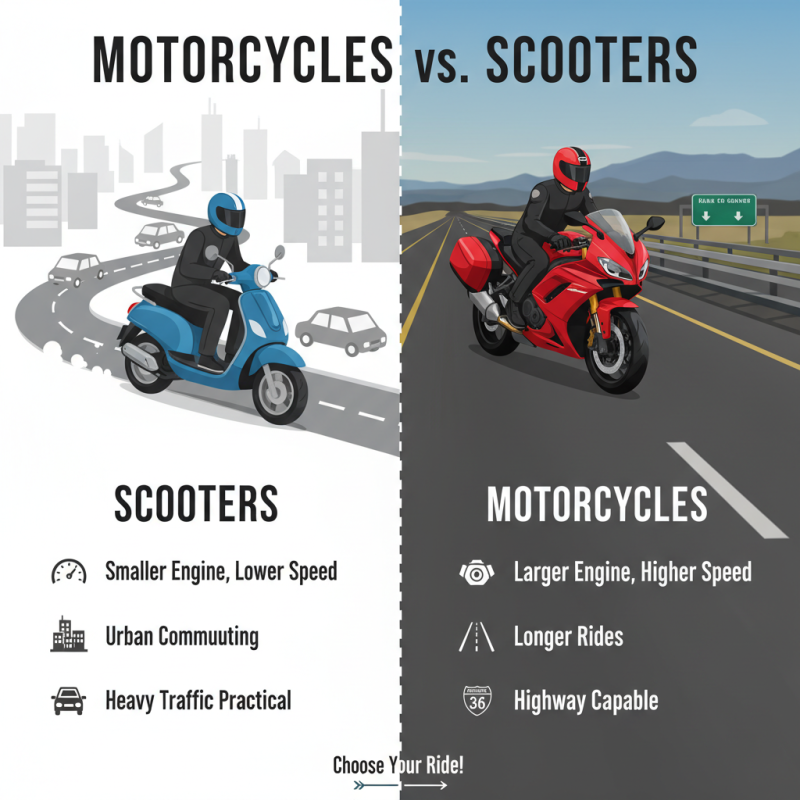
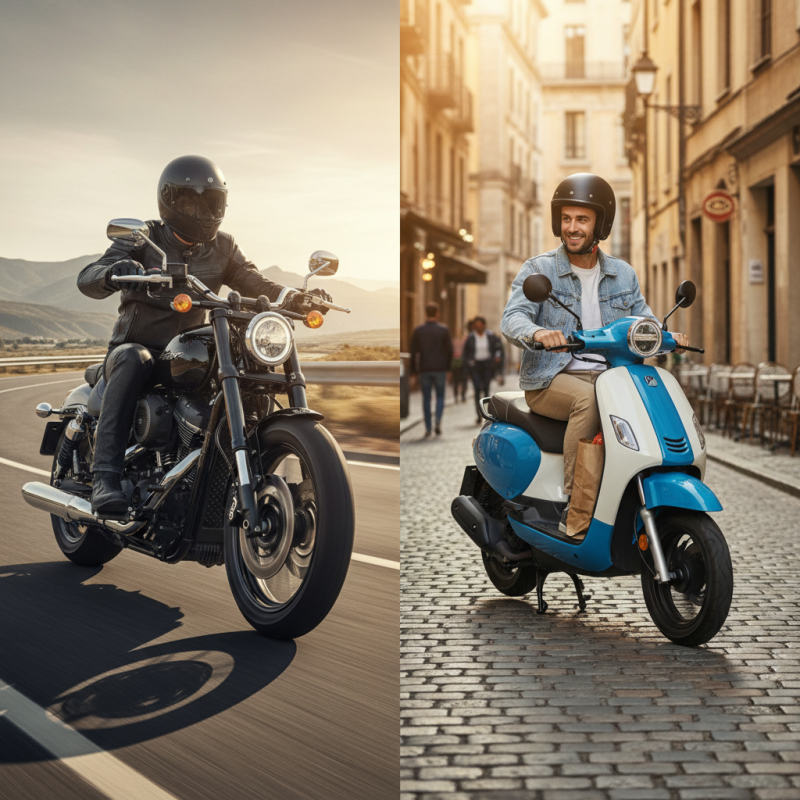
When considering whether to choose a motorcycle or a scooter, it's essential to understand their differences. Motorcycles usually have larger engines and can reach higher speeds. They are designed for longer rides and can handle highways better. Scooters, on the other hand, are smaller and lighter. They excel in urban environments, making them ideal for city commuting. If you frequent areas with heavy traffic, a scooter might be more practical.
The seating position on motorcycles is different too. Motorcycles often require more body strength for control. Scooters are easier to ride, especially for newcomers. The storage space is another point of distinction. Most scooters feature under-seat storage, perfect for stashing items like a helmet or groceries. This can be useful for quick trips to the Scooters Restaurant after a ride.
Maintenance also varies significantly. Motorcycles may require more frequent service, especially for those with complex parts. On the contrary, scooters typically require less maintenance due to their simpler mechanics. Riders should ponder these factors carefully. If you value speed and power, motorcycles are advantageous. Yet, for ease of use and convenience, scooters often shine brighter in daily situations.
Evaluating Your Riding Experience and Skill Level
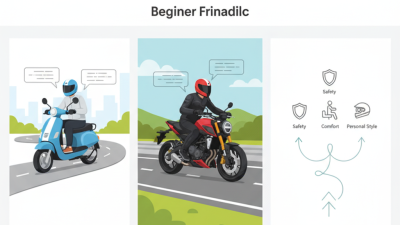
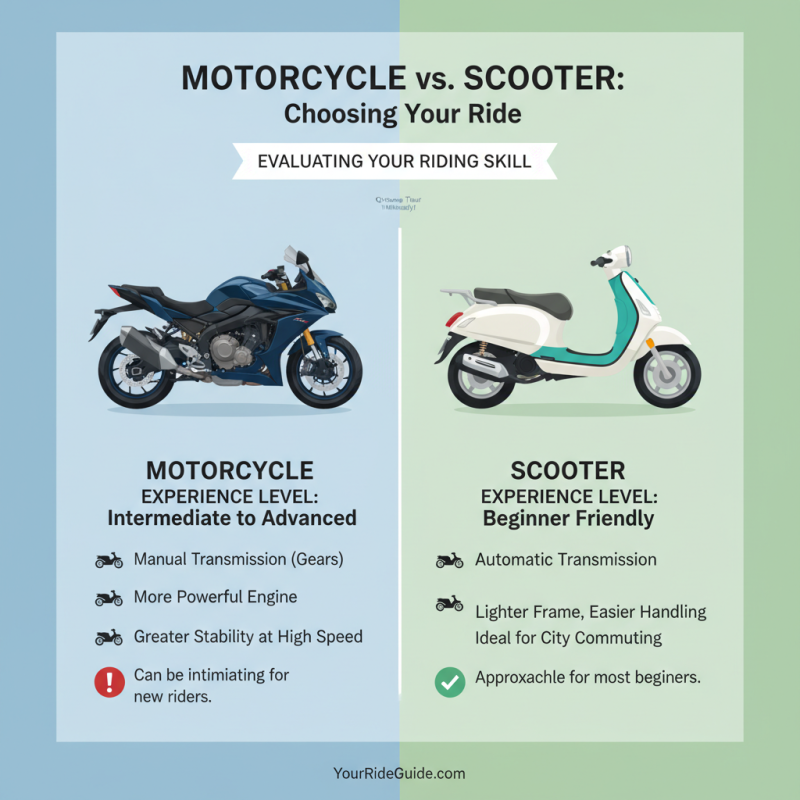
Choosing between motorcycles and scooters often hinges on your riding experience and skill level. Riders vary widely in their abilities and confidence. A motorcycle generally requires more experience. It offers powerful performance and greater stability at higher speeds. New riders might find this intimidating. Scooters are typically easier to handle. They have automatic transmissions and lighter frames. This makes them more approachable for beginners.
Tips: If you're new to riding, start with a scooter. It can help build your confidence without overwhelming you. Take a basic riding course. This will enhance your skills and safety awareness. Even experienced riders should consider refresher courses. Riding conditions can change and skills can fade.
Reflect on your local environment. If you live in a busy urban area, a scooter may be more practical. They are great for navigating through traffic. However, if you're planning longer trips, a motorcycle may suit you better. It can handle highways and longer distances with ease. Think about your lifestyle and how you'll use your bike. This self-assessment is crucial in making a smart choice.
Assessing Your Commute and Distance Requirements
When assessing your commute and distance requirements, the choice between motorcycles and scooters becomes clearer. Many commuters travel short distances, often under five miles. For these situations, scooters may be preferable due to their lightweight design and ease of maneuverability. A study by the Motorcycle Industry Council indicates that 65% of urban riders prefer scooters for daily commutes.
Consider the type of roads you will frequently travel. If you often navigate heavy traffic, scooters excel. They are nimble and easier to park. Alternatively, motorcycles may better suit longer journeys or highways. On average, motorcycles can handle speeds up to 80 mph, while scooters typically cap around 60 mph. This difference affects how you plan trips.
Tips: Evaluate your daily route. Choose scooters for urban settings and motorcycles for longer rides. Remember to factor in fuel efficiency. Road Legal Scooters often achieve around 75 mpg, while motorcycles average about 50 mpg. This data can greatly influence your decision, ensuring you select the best option for your commute. Don't overlook the importance of safety gear, regardless of your choice. Riding should prioritize both comfort and protection.
Considering Fuel Efficiency and Maintenance Costs
When considering scooters and motorcycles, fuel efficiency and maintenance costs are crucial. Scooters generally offer better fuel efficiency, often achieving over 70 miles per gallon. This is a significant benefit for city commuting. In contrast, motorcycles usually provide a larger engine and more power but consume more fuel.
Maintenance costs vary widely between the two. Scooters typically require less frequent servicing, making them more budget-friendly. Simple engine designs mean fewer problems. On the other hand, motorcycles, while potentially more reliable in some cases, can incur higher costs due to complex parts and servicing needs.
**Tips:** Always check the fuel efficiency ratings before making a purchase. Don’t forget to factor in maintenance schedules. A scooter may save money upfront, but if you neglect maintenance, costs can add up rapidly. Understanding your travel habits also helps. A daily city commute might favor scooters, while longer weekend rides may benefit from motorcycles.
Exploring Safety Features and Riding Comfort
When deciding between motorcycles and scooters, safety features are a critical factor. Many scooters offer a low center of gravity, improving stability while riding. This can help new riders feel more secure. Look for scooters with anti-lock braking systems (ABS). ABS can prevent wheel lock-up during sudden stops, enhancing rider safety.
Comfort is another essential aspect. Motorcycles often have adjustable seating positions and suspension systems. Touring Scooters combine the convenience of scooters with added comfort features. They typically include spacious storage and ergonomic seating, making them great for long rides. However, some riders may find the handling of heavy scooters less responsive than motorcycles, especially on winding roads.
Rider experience matters too. Some find scooters easier to handle in city traffic. Yet, those who prefer speed may lean towards motorcycles. It's important to spend time testing both options before deciding. Each option comes with its own set of pros and cons. The right choice often depends on individual preferences and riding conditions.
Analyzing Storage Capacity and Practical Use Cases
When choosing between motorcycles and scooters, storage capacity is a critical factor. A study from the Motorcycle Industry Council indicates that 47% of riders prioritize storage options. Motorcycles generally offer more space, often equipped with saddlebags and larger compartments. However, scooters like Gasoline Scooters tend to provide convenient under-seat storage.
Practical use cases matter too. For urban commuting, scooters excel due to their nimbleness and lighter weight. A 2022 report noted that scooters saved riders an average of 30% on fuel costs compared to motorcycles. This makes them attractive for daily errands where parking and maneuverability are essential. Conversely, for longer trips or carrying heavier loads, motorcycles shine with their enhanced storage and stability.
However, not all riders consider the trade-offs between space and practicality. Choosing a scooter might result in limited capacity for larger items, while motorcycles can be cumbersome in dense city traffic. Awareness of these aspects can guide riders in making an informed decision that fits their lifestyle and storage needs.
Finding the Right Model: Brands and Price Ranges
When choosing between motorcycles and scooters, understanding brands and price ranges is essential. Each type offers unique benefits. Scooters are generally more affordable and have lower maintenance costs. They are ideal for short commutes and city driving. Many brands focus on this market, offering reliable models at varying prices.
Motorcycles, on the other hand, can range widely in cost. Some entry-level models are affordable, while high-performance bikes can be quite expensive. Motorcycle brands often emphasize durability and performance, which may justify higher prices. It's important to consider your own riding style and budget. Take time to research models that fit your needs.
Look for reviews and expert opinions. Online forums can provide insights from experienced riders. Engaging with real user experiences can highlight pros and cons. This information may lead you to rethink initial preferences. Balancing brand reputation with personal requirements can be tricky. Every choice has trade-offs, so reflect on what matters most in your riding experience.
How to Choose Between Motorcycles and Scooters for Your Needs?
Exploring the Impact of Motorcycle Tourism on Local Economies: A Case for KAVAKI Motorcycles
Motorcycle tourism has emerged as a significant player in boosting local economies, particularly in regions that offer scenic routes and adventure-seeking experiences. According to the United Nations World Tourism Organization, adventure tourism, which includes motorcycle tourism, is anticipated to grow at an annual rate of 5-6%. This trend highlights how regions that attract motorcycle tourists can experience increased revenue from accommodation, dining, and local attractions.
The economic impact of motorcycle tourism is palpable when we consider the profiles of tourists it attracts. Riders often seek immersive experiences, staying longer in regions to explore local culture and cuisine. A report by the Motorcycle Industry Council indicates that motorcycling contributes over $50 billion to the U.S. economy annually, with a significant portion stemming from tourism-related activities. This influx of visitors can create job opportunities and spur growth in businesses such as repair shops, dealerships, and local tour operators.
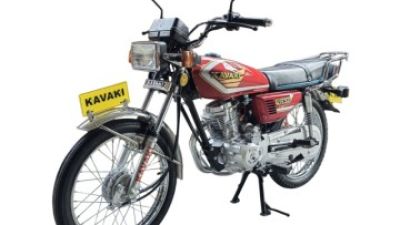
Additionally, motorcycles like those designed with a focus on reliability and performance can enhance the touring experience. With specifications such as a 125cc engine that delivers robust power and torque, these bikes are ideal for long journeys, making them popular among tourists. Features like an 8.4L fuel tank ensure that riders can cover substantial distances without frequent stops, fostering a seamless travel experience. As communities recognize the economic potential of motorcycle tourism, investing in infrastructure and services tailored to these travelers will be crucial for maximizing benefits.
FAQS
: New riders should consider starting with a scooter. It’s easier to handle and builds confidence.
A basic riding course enhances skills and safety awareness. It’s beneficial for beginners and experienced riders alike.
Scooters are great for navigating busy traffic. They are lighter and more maneuverable in congested environments.
For longer trips, a motorcycle is better. It handles highways and distances more comfortably.
Scooters tend to be more affordable with lower maintenance costs. Motorcycles vary widely in price, impacting your budget.
Reviews provide insights from experienced riders. Engaging with others may change your initial preferences.
Your local environment influences practicality. Urban settings may favor scooters, while rural areas might suit motorcycles.
Each option has benefits and drawbacks. Reflect on what matters most for your riding experience.
Conclusion
When choosing between motorcycles and scooters, it's essential to understand their fundamental differences. Motorcycles typically offer more power and speed, making them suitable for longer commutes and varied terrains, while scooters are often lighter and easier to handle, perfect for urban travel. Evaluating your riding experience and skill level is crucial, as motorcycles require more expertise compared to the intuitive handling of scooters.
Moreover, considering factors such as fuel efficiency and maintenance costs will help you make a cost-effective choice. Safety features and riding comfort should also be a priority, as they contribute significantly to your overall riding experience. Finally, analyzing storage capacity and practical use cases can guide you in selecting the right model that fits your lifestyle, with various brands and price ranges available in both motorcycles and scooters to meet diverse needs.